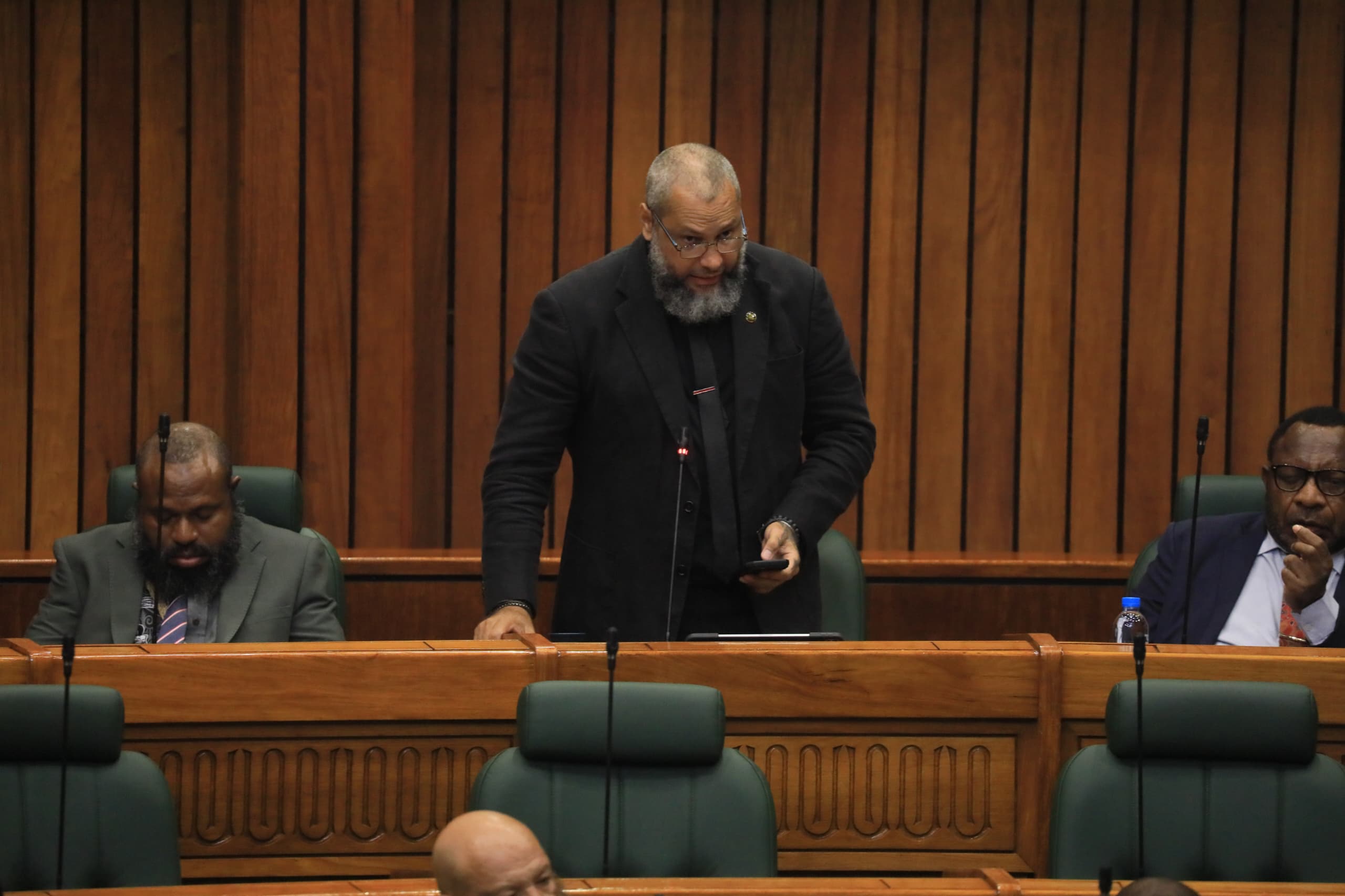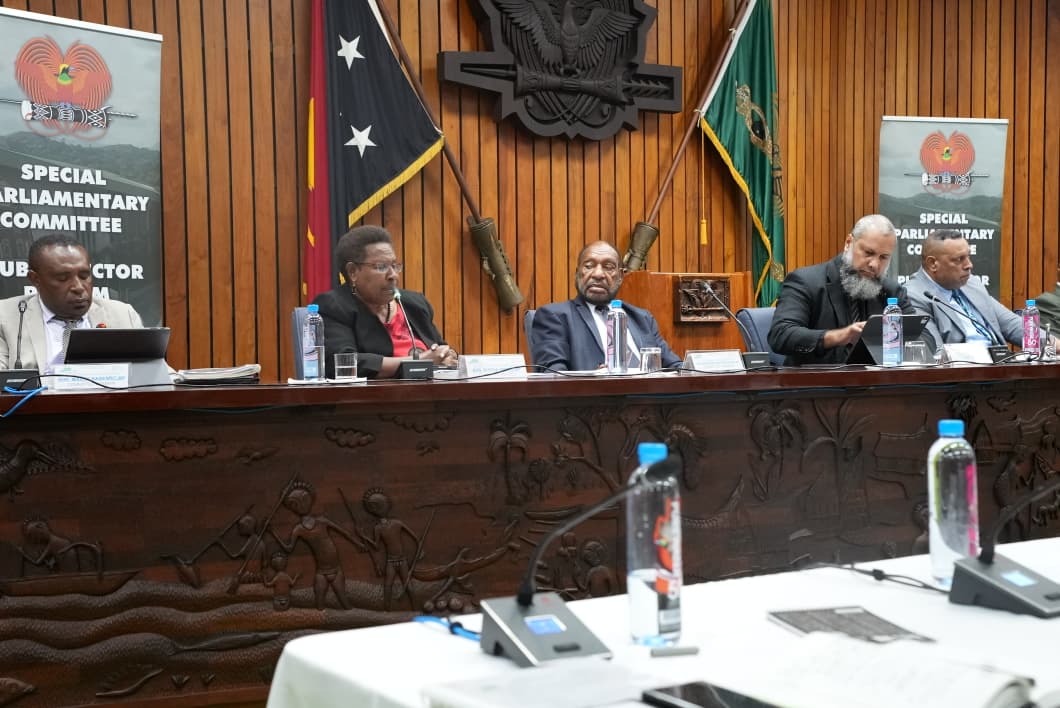
The Chairman of the Special Parliamentary Committee on Public Sector Reform and Service Delivery (SPCPSR), Governor Gary Juffa, has commended the Papua New Guinea Immigration and Citizenship Authority, the Royal Papua New Guinea Constabulary, and all government agencies involved in the recent operation in Wau and Bulolo that resulted in the apprehension of 87 foreign nationals suspected of breaching Papua New Guinea’s immigration laws.
Governor Juffa said the operation demonstrates what can be achieved when government agencies work together to uphold the rule of law and protect the nation’s interests.
“I congratulate the officers and agencies involved for their professionalism, dedication and courage. Their efforts send an important message that Papua New Guinea’s laws must be respected and that those who seek to operate outside those laws will increasingly face enforcement action.”
However, Governor Juffa said enforcement operations alone will not solve the broader problems affecting the alluvial mining sector.
“The current penalties under many of our immigration, mining and associated laws are outdated, weak and offer little real deterrence. For too long, offenders have regarded fines as simply another cost of doing business.”
“I therefore call on the National Government to urgently review and strengthen the penalties available under our legislation to ensure that serious breaches attract penalties that genuinely discourage illegal activity. Repeat offenders and organised criminal enterprises should face substantially harsher sanctions, including significant fines, imprisonment where appropriate, confiscation of equipment and assets, cancellation of licences and deportation where the law permits.”
Governor Juffa further stated that enforcement efforts must extend beyond those found working illegally on mining sites.
“Those individuals and companies that facilitate, finance, employ, harbour or otherwise enable illegal mining operations must also be investigated and prosecuted. Without those who organise and profit from these unlawful activities, many of these operations could not continue. The law must hold accountable not only the workers but also those who knowingly benefit from or support these illegal enterprises.”
The Chairman also expressed concern regarding the performance of key regulatory agencies responsible for oversight of the sector.
“The Special Parliamentary Committee’s review of the alluvial mining sector uncovered deeply concerning evidence of significant quantities of Papua New Guinea’s gold being smuggled out of the country through illicit channels. Expert evidence presented during the Committee’s inquiry suggested that as much as K4 billion worth of gold may be smuggled out of Papua New Guinea annually, representing an enormous loss of national revenue, taxation, foreign exchange earnings and economic opportunity for our people.”
“These findings should have triggered a far more robust regulatory response. I remain concerned that both the Bank of Papua New Guinea and the Mineral Resources Authority have yet to demonstrate sufficiently decisive action within their respective mandates to address these ongoing issues. Entities that have been licensed but are subsequently found to be operating unlawfully, or in breach of licence conditions, should be subject to immediate review. Where the evidence warrants, those licences should be suspended or cancelled in accordance with the law.”
“Where there are credible concerns regarding the circumstances in which licences were issued, those matters should also be independently examined to ensure that every licence has been granted lawfully, transparently and in the public interest.”
“The Committee’s hearings exposed systemic regulatory weaknesses that have enabled illegal operators and criminal networks to exploit Papua New Guinea’s mineral wealth for far too long. This cannot continue.”
Governor Juffa stressed that leadership and reform must come from the highest levels of Government.
“Ministers are appointed not simply to administer the status quo. They are entrusted by the people to lead, to reform broken systems and to ensure that government institutions perform effectively in protecting the national interest.”
“The SPCPSR expects Ministers responsible for these sectors to champion meaningful reforms, demand accountability from their agencies and ensure that regulatory bodies discharge their statutory responsibilities without fear or favour.”
“The Committee has observed some efforts to improve regulatory oversight, and those efforts are acknowledged. However, the pace of reform remains lacklustre, too timid and simply does not reflect the scale or urgency of the problems identified during our inquiry.”
Governor Juffa said the Committee’s findings highlighted the urgent need for stronger coordination between Immigration, Police, Customs, the Internal Revenue Commission, the Mineral Resources Authority, the Bank of Papua New Guinea, CEPA and other enforcement agencies.
“Illegal mining is not simply an immigration issue. It is an issue of organised crime, revenue leakage, environmental destruction, money laundering, tax evasion and the theft of Papua New Guinea’s natural wealth.”
“The agencies of government must continue working together through coordinated intelligence-sharing, joint compliance operations and stronger regulatory oversight to dismantle these illegal networks.”
“The Special Parliamentary Committee on Public Sector Reform and Service Delivery will continue to vigorously pursue legislative and administrative reforms arising from its inquiries. We remain committed to ensuring that public institutions become stronger, more accountable and more capable of protecting Papua New Guinea’s resources for the benefit of present and future generations.”
My Parliamentary Committee will be tabling a Report to Parliament from its public Hearings into the Alluvial Gold sector in the upcoming July session recommending urgent reforms. We simply cannot continue to ignore a revenue hole of up to K6.4 Billion a year. Our loss is another’s illegal gain.